Stock: cold water, and why you never let it boil
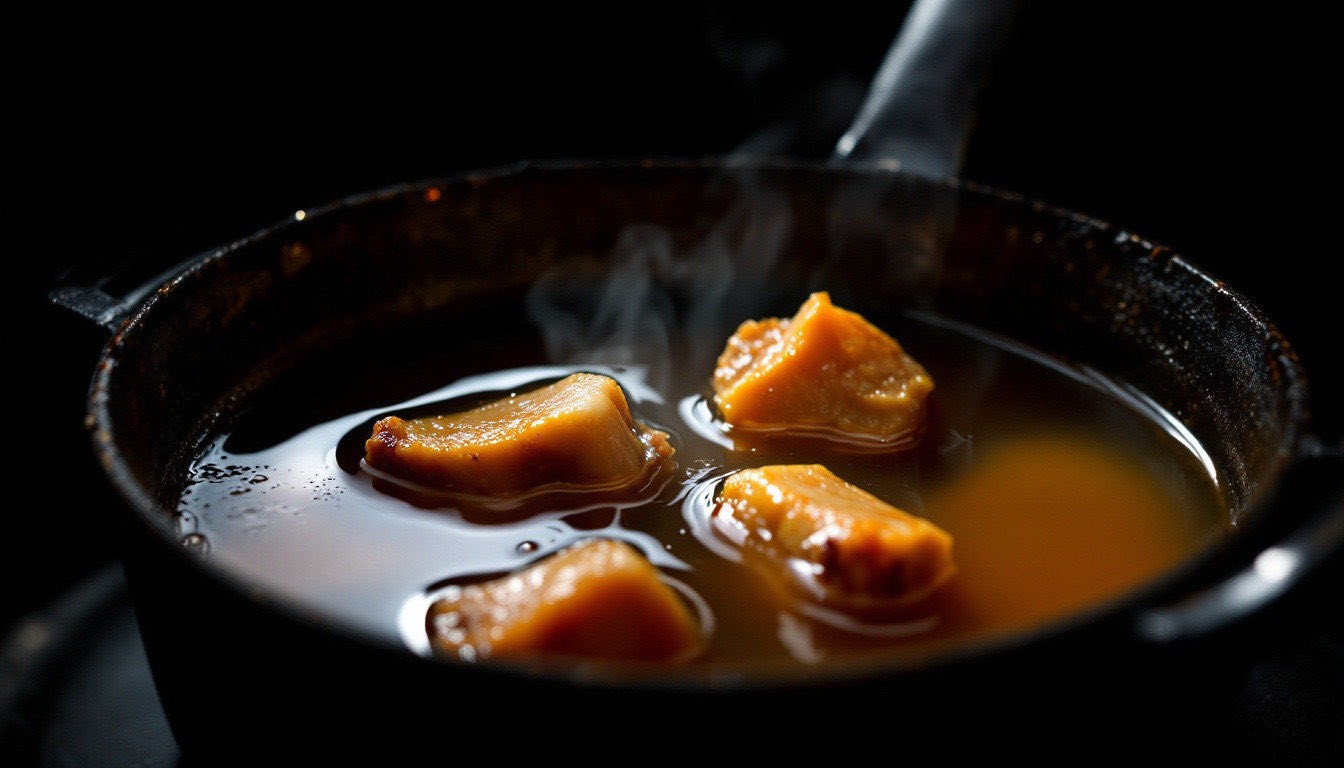
Two rules decide whether you get clear stock or grey soup. One governs how you start it, the other governs how hard it is ever allowed to bubble, and both get broken when a kitchen is in a hurry.
Start cold
Put the bones in cold water and bring them up slowly. Not hot water, not a boiling pot you drop bones into.
Cold water starts below the temperature at which proteins set. As it climbs, the soluble proteins and blood leach out of the bones and rise to the surface as scum, where you can lift them off. Drop bones into water that is already hot and those same proteins seize on contact and stay locked inside, or break into fine particles that never surface. You end up cloudy before you have started.
Skim in the first twenty minutes. That is when almost all of it comes up.
Never let it boil
Once it is up, hold it at a bare simmer. You want the odd bubble breaking, not a rolling surface.
A boil does two things you do not want. It smashes the fat into droplets small enough to suspend in the liquid, so instead of a fat cap you can lift off cold, you get an emulsion you cannot separate. And it drags the sediment you skimmed off back through the pot, over and over.
Cloudy stock is almost always a boiled stock. There is no fixing it afterwards.
Time and temperature
Collagen converts to gelatin slowly, and the conversion is what gives stock body. Around 85°C, held for hours, is where that happens.
- Fish, 20 to 30 minutes. Longer turns it bitter.
- Chicken, 3 to 4 hours.
- Veal and beef, 6 to 8, sometimes longer.
Roast the bones first if you want brown stock. That is the only real difference between white and brown — the colour and depth come from Maillard on the bones and the vegetables before any water is added.
Aromatics go in late
Vegetables and herbs do not need six hours. They need about an hour. Put them in at the start of a long stock and they are spent well before the bones are done, and they will start giving back bitterness.
Do not salt it
Stock is an ingredient, not a finished thing. You will reduce it later, maybe by half, maybe by more. Salt it now and you have no control over where it lands. Season the sauce, not the stock.