The anatomy of butchery: primal cuts, grain, and the silver skin
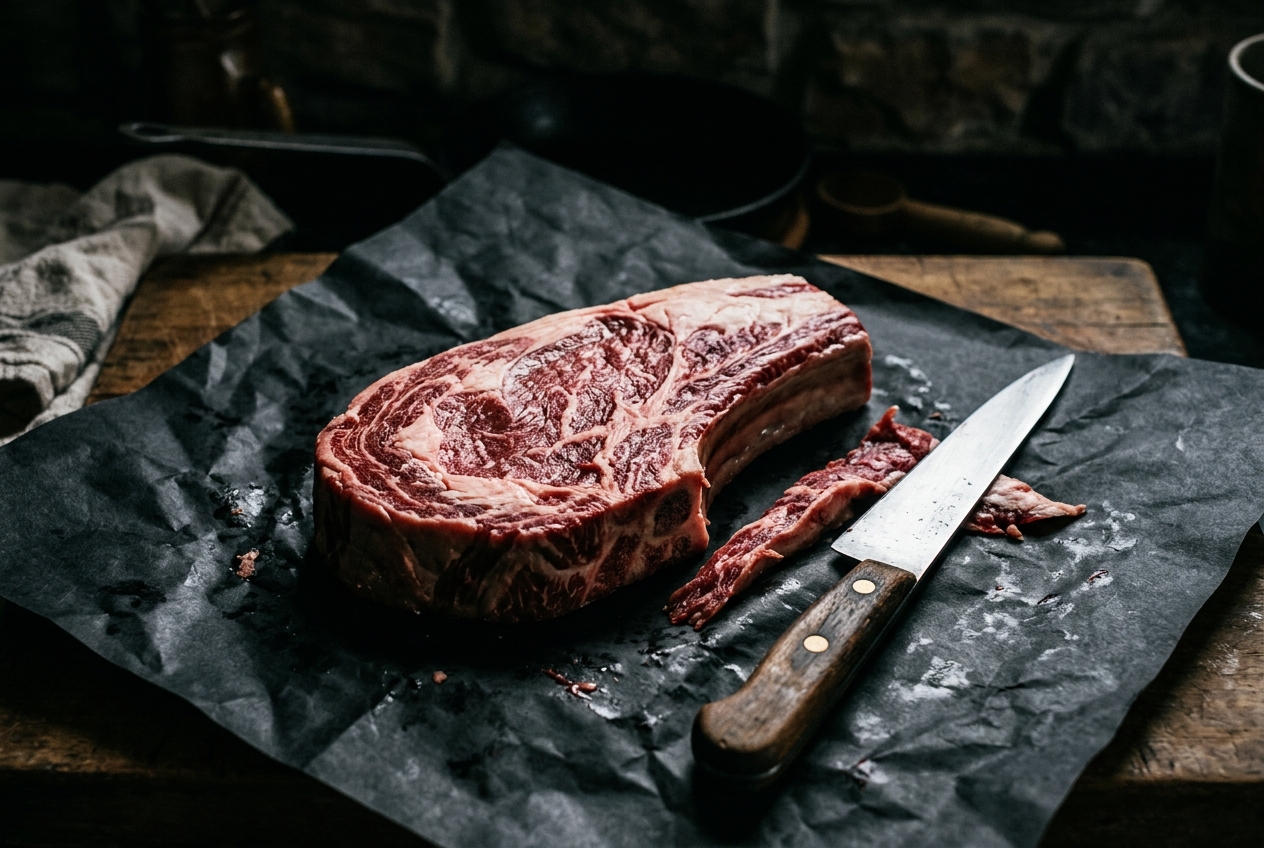
Most home cooks buy meat wrapped in plastic, pre-cut and pre-trimmed. They see meat as a static product.
In a kitchen, we see butchery as seam-tracking. Every muscle group is separated by a membrane, and if you follow that membrane with a sharp boning knife, the meat practically cuts itself.
Here is what you need to know about the anatomy of meat to get the best texture out of every cut.
Primal vs Subprimal
A carcass is first divided into primal cuts — large sections like the chuck, loin, rib, and round. These are too large to cook directly.
We break them down into subprimal cuts (like the ribeye, tenderloin, or flat iron) and then portion them into individual steaks or roasts.
* Working muscles (shoulder, leg) do a lot of movement. They are full of connective tissue (collagen) and have deep, thick grain. They need slow, wet cooking (braising) to break down the collagen into gelatin.
* Support muscles (loin, rib) do very little work. They are tender and low in collagen. They need quick, dry heat (searing, roasting) to cook before they dry out.
The silver skin is non-negotiable
Silver skin is the shiny, white connective tissue (elastin) on cuts like the tenderloin or pork loin.
Unlike collagen, elastin does not break down during cooking. It stays tough, rubbery, and contracts as it heats, causing your meat to curl in the pan and cook unevenly.
Always slip a flexible boning knife under the silver skin, blade angled slightly upward against the membrane, and slide it along the muscle to remove it cleanly without losing meat.
Slicing against the grain
Muscle fibres run parallel to each other like wood grain.
* Slicing with the grain keeps the long muscle fibres intact. When you chew, your teeth have to tear those long fibres apart. The meat feels tough.
* Slicing against the grain (perpendicular to the fibres) cuts the fibres into short pieces. When you bite, the work is already done. Even a cheaper cut like flank steak or bavette becomes incredibly tender if sliced correctly.
The Frenching technique
Frenching is scraping the meat, fat, and membranes clean off the bones of racks (like lamb or prime rib) to expose the bare bone.
It is decorative, yes, but it also prevents the fat on the bone from burning during roasting and creating bitter smoke that ruins the meat's flavour.
The knife does less of the work than people think. Most of butchery is knowing where the seams already are.