Braising and stewing are not the same thing
The words get used as if they mean the same thing. They describe two methods with a real distinction, and which one you are doing decides how much liquid you add and what you have at the end.
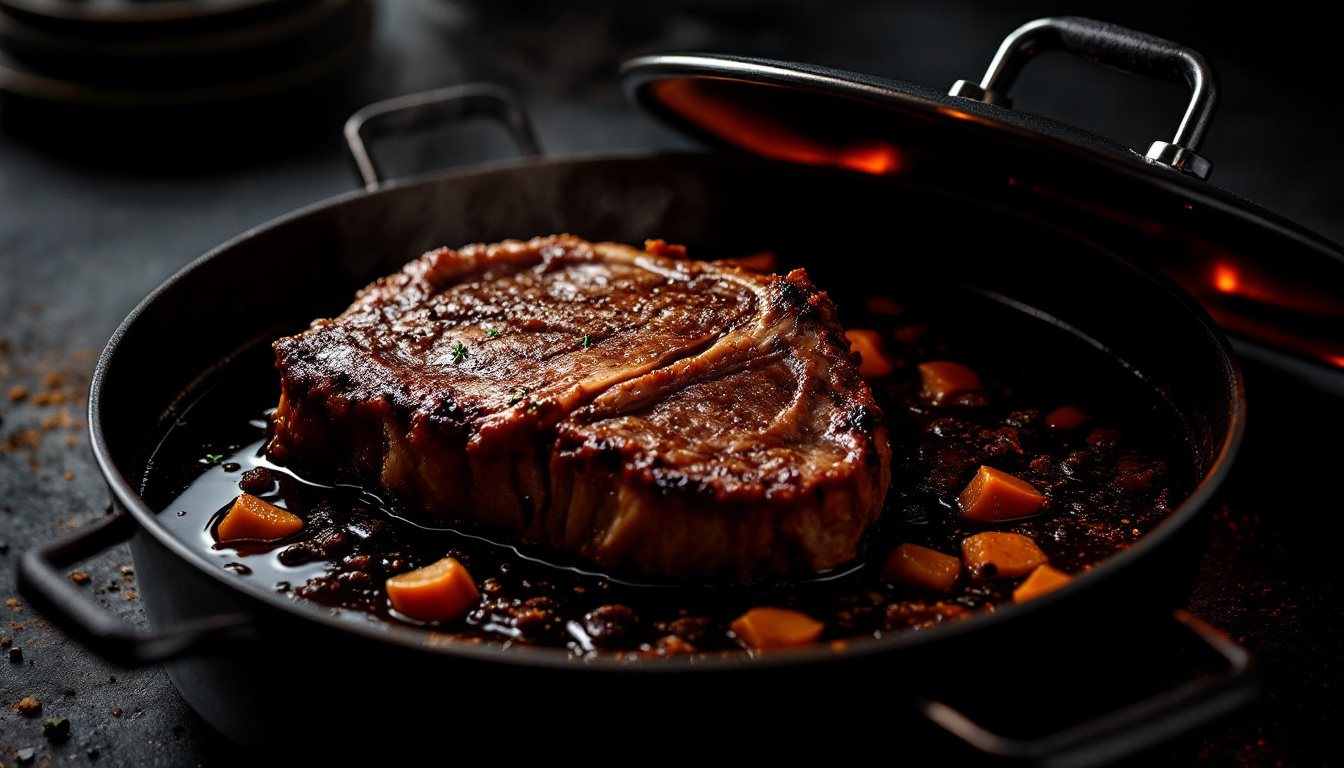
A braise is a large piece of meat, partly submerged — a third to halfway up — cooked covered, so the part below the liquid cooks by conduction and the part above cooks in steam. You turn it once or twice. A stew is smaller, uniform pieces, fully submerged. The consequence is that a braise leaves you a concentrated liquid that becomes the sauce, while in a stew the liquid is already part of the dish.
Both exist for the same reason. Hard-working cuts are full of connective tissue, and connective tissue is unpleasant until it becomes gelatin. That conversion starts around 70°C and proceeds slowly, which is why four hours gives you tender and ninety minutes at a higher temperature does not. You cannot substitute temperature for time here — hotter only squeezes water out of the muscle while the collagen is still converting. It is also why working cuts improve on the second day and lean cuts do not.
Neither browns anything, so whatever depth the dish has it got before the liquid went in. Dry the surface, sear hard in batches, brown the vegetables in the same pan, deglaze. Crowding the pan here is the commonest reason a braise tastes thin: wet meat steams instead of browning, and there is no second chance once the liquid is in.
Keep it low, an oven around 150°C or the barest simmer. If the surface is bubbling hard you are tightening the muscle faster than the collagen converts. Lid on for most of it, and if you want the liquid reduced, strain it at the end and reduce it separately while the meat rests.
Time is a guide. The test is a skewer going in with no resistance. Underdone is tough, overdone is dry and stringy, and both are fixable only by starting again.