Baharat: what is actually in the jar
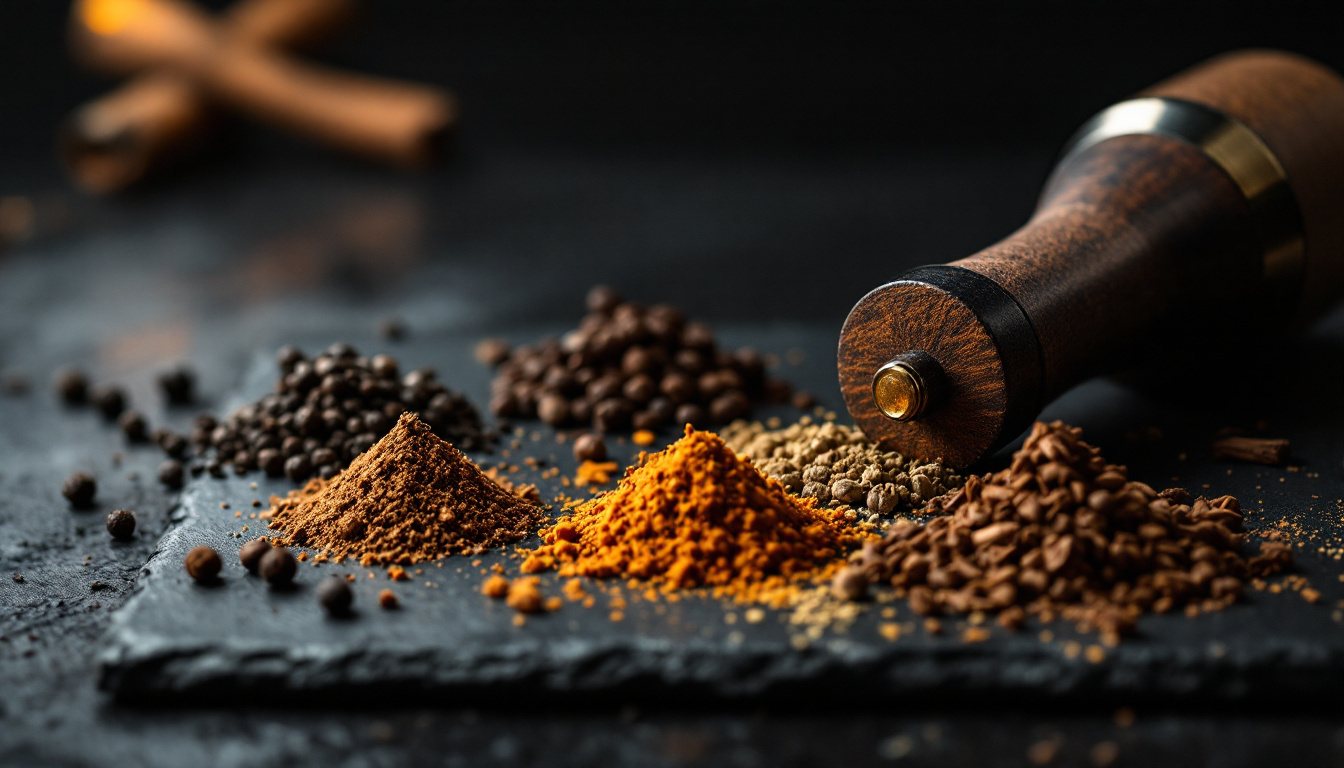
Baharat is Arabic for spices, plural. As the name of a blend it is about as precise as curry powder, so knowing what is in front of you decides whether you use it straight or adjust.
Most are built on the same group: black pepper, cumin, coriander seed, cinnamon or cassia, cloves, cardamom, nutmeg, and paprika for colour. Warm and slightly sweet from the cinnamon and cardamom, earthy from the cumin and coriander, with heat from pepper rather than chilli.
Where it changes is worth knowing. Gulf blends often carry ground loomi, which adds a sour, fermented note nothing else provides, and that is the version for lamb and rice. Levantine blends lean on allspice, sometimes enough that allspice dominates. Turkish versions often include dried mint, North African ones sometimes dried rose petals. If a blend tastes unexpectedly sour it has loomi in it; unexpectedly sweet and medicinal, it is heavy on clove or allspice.
Pre-ground spice loses its aromatics steadily and most of what you buy has sat somewhere warm. Toasting whole spices in a dry pan until they smell — a minute or two, moving constantly, off before they take colour — then grinding gives you something not comparable to the jar. Cinnamon, nutmeg and dried chilli are better ground without toasting. Make small amounts, or the advantage disappears.
However you get it, bloom it in fat. These compounds are fat-soluble, so baharat stirred into liquid gives a fraction of what it can do. Thirty seconds in hot oil before the liquid goes in, and it should smell immediately. Much longer and ground spice burns and turns bitter, so the window is short.
It goes with meat principally — lamb, chicken, beef kofta, and rice cooked in the same pot. It also works dusted over roasted vegetables or lentils, though there it wants lemon or yoghurt alongside, or it sits heavy.