Black cardamom — the spice most Western chefs have never opened
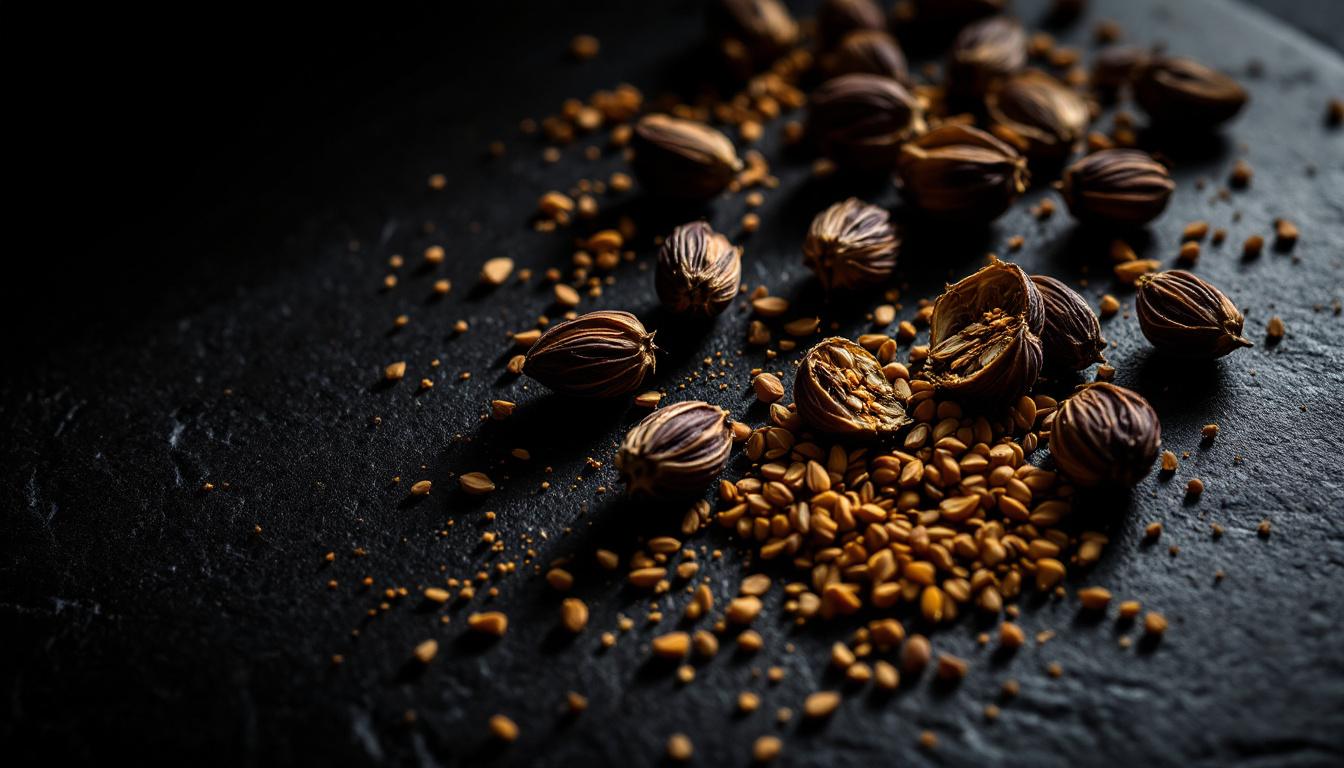
Green cardamom gets all the attention. It's in chai, in Scandinavian pastries, in half the spice blends in any well-stocked kitchen.
Black cardamom is its relative — same family, entirely different flavour. It's been used in East African and South Asian cooking for centuries. Most Western chefs have never cracked one open.
Green cardamom is floral, citrusy, bright. Black cardamom is smoked, camphor-like, with a cooling menthol note underneath. It smells like it was dried over a fire — because it was. The pods are traditionally smoke-dried over open flames. It's not a substitute for green. It's a different ingredient that happens to share a name.
Long braises. This is where black cardamom earns its place. It can withstand extended cooking without becoming bitter, and it adds a background smokiness that builds depth in ways that liquid smoke or paprika can't replicate cleanly. Add a pod to the cooking water for pilau or biryani — it perfumes the rice with a subtle camphor note that reads as complexity rather than spice. Cracked open and added to a marinade for 24 hours, it imparts a quiet smokiness that you taste but can't always identify. The earthiness of black cardamom and the nuttiness of lentils are natural partners. I use it in slow-cooked lentils more than anything else.
Always whole or lightly cracked — never ground. Ground black cardamom is overwhelming and becomes medicinal fast. Treat it like a bay leaf: add whole, retrieve before serving. One pod is usually enough for a dish serving four.
It's not subtle.
The spices nobody talks about are often the ones that explain why one version of a dish tastes better than another.