What the first year in a professional kitchen actually does to you
The first year in a professional kitchen is not what you expect.
You expect to cook. You cook, but not the way you imagined. You peel vegetables for three hours. You wash pans until your hands are cracked. You prep the same mise en place every morning before service and you do it alone, standing up, with music you didn't choose playing in the background.
You expected to learn technique. You do. But you learn it by watching, not being taught. Nobody has time to explain. You watch a senior cook do something once and you figure out the rest yourself, or you ask a question at the wrong moment and you don't ask again.
The first real thing you learn
It's not how to cook. It's how to take correction without shutting down.
In a kitchen, someone will tell you your knife cuts are wrong, your mise en place is disorganised, your timing is off — in front of the whole station, while service is already running. There's no softening of it. That's not cruelty. That's the pace. You either take the note and adjust in real time, or you freeze and fall behind.
The first time it happened to me I went quiet for an hour. The second time I adjusted mid-task. The third time I said yes chef and moved.
That's the evolution. It's not big. But it compounds.
What the grind actually is
The grind in kitchen culture gets romanticised. Social media makes it look like grit and hustle and long hours being noble somehow.
It's not. It's just the reality of a kitchen's operating hours and the number of bodies needed to keep them running.
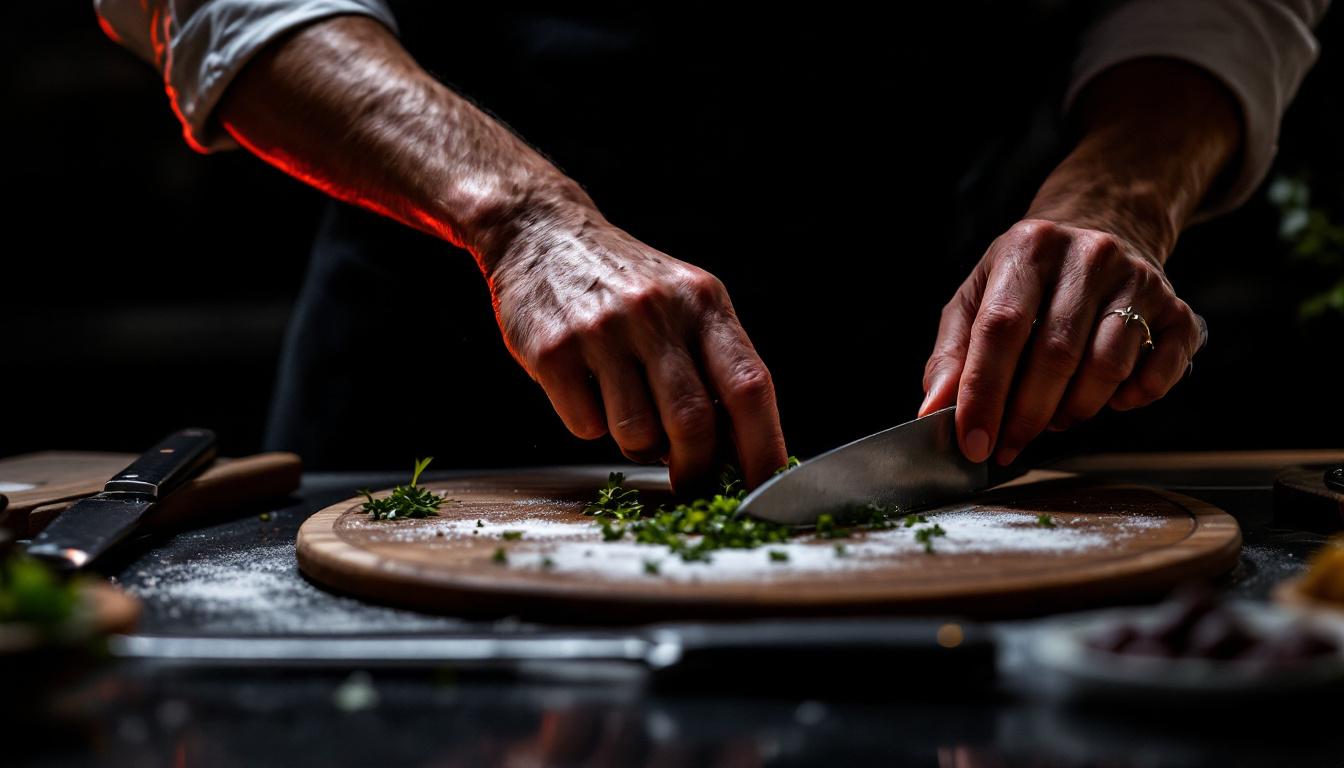
The real grind isn't the hours. It's doing the same task repeatedly until it requires no thought. Peeling a hundred onions until the motion is automatic. Breaking down the same protein until you feel the difference in the cut without looking. That repetition is how a skill gets built in a kitchen — not in a classroom, not in a video. Under your hands, over time, with failure mixed in.
What evolution actually looks like
Nobody announces it. You don't wake up one morning and realise you've improved.
You notice it in small moments. A service goes hard and you hold the station. You look at a refrigerator of random ingredients and see a dish. A junior cook asks you something and you know the answer.
That's it. No ceremony. You just start being better at something you were worse at before.
For anyone at the beginning
The discomfort you're feeling is not a sign you're in the wrong place. It's a sign the place is bigger than you are right now.
Every competent chef I've worked with has said some version of the same thing: the first year was the hardest and the most important. Not because it was pleasant, but because it settled something about whether you were going to stay.
If you stayed, you started becoming something. If you didn't, you found out early. Both are useful information.
Nobody in a kitchen is measuring what you meant to do. They are measuring whether you came back the next morning and did it again.