Fermentation without equipment — what you can do with salt and time
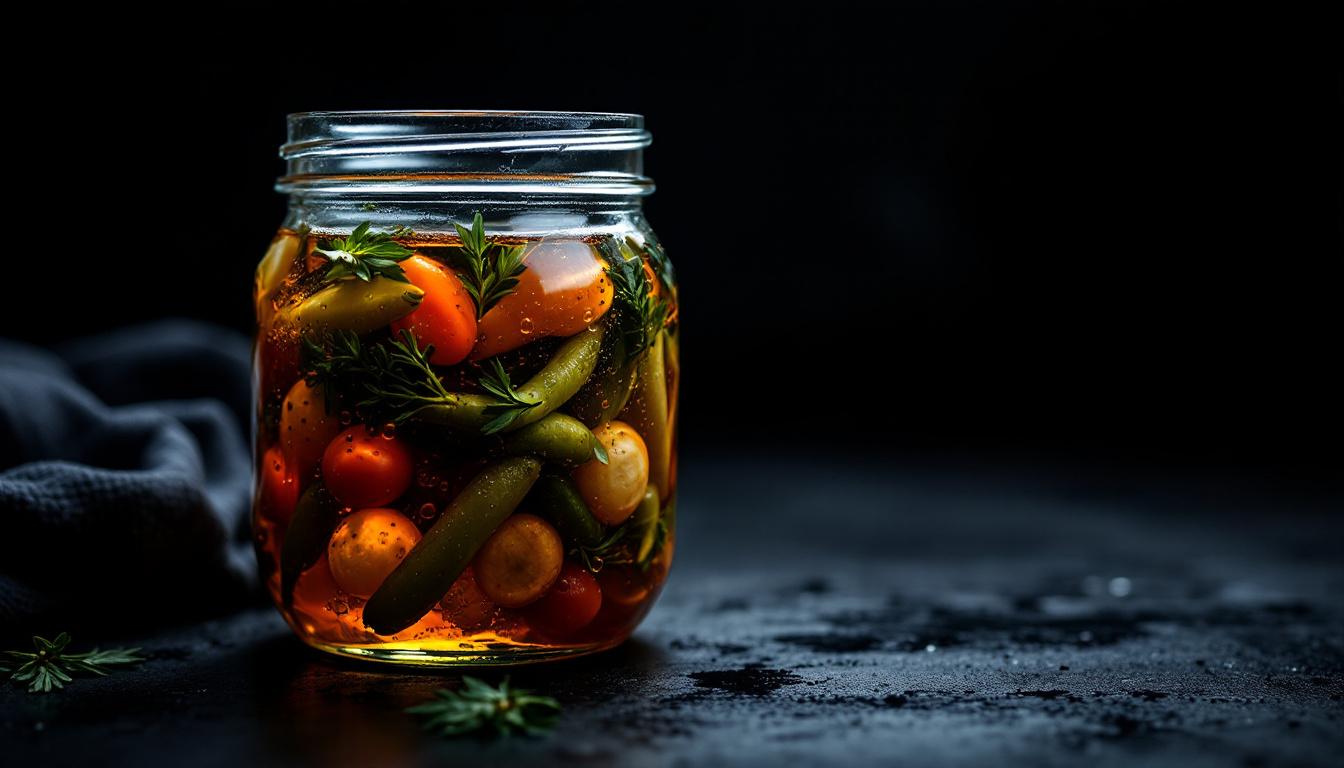
Fermentation intimidates people who haven't done it. It shouldn't.
The most basic forms require nothing more than salt, a clean jar, and the patience to leave things alone. Lacto-fermentation is the process where naturally occurring bacteria on vegetables convert sugars into lactic acid. The acid preserves the food, suppresses harmful bacteria, and creates a sour, complex flavour that no other cooking process replicates. The salt creates an environment hostile to harmful bacteria while allowing lactobacillus to thrive. Get the salt ratio right and the process is nearly impossible to ruin.
2% brine by weight. For every 100g of vegetables, use 2g of salt. Dissolve the salt in water, submerge the vegetables, keep them submerged, leave at room temperature.
That's it.
Start with cabbage, cucumber, carrots, radishes, chillies. These all ferment reliably and show results within 3 to 7 days. Bubbles within 24 to 48 hours means it's working. A pleasantly sour smell — not rotten, not sharp. The brine turning slightly cloudy. If you see pink or black mould on the surface, something went wrong. White kahm yeast is fine — skim it off.
Fermented vegetables as a condiment alongside grilled meat. Mixed into a sauce base for acidity and depth. As part of a marinade. The liquid itself — the brine — is useful too, as a dressing acidifier or a basting liquid.
Once you have one successful ferment, the process becomes intuitive. The second one is never as nerve-wracking as the first.
The oldest preservation technique in human cooking is still one of the most useful. Salt and time haven't been improved on.