What eating in Kampala taught me that no kitchen in Riyadh could
I grew up going to restaurants that my mother called "too expensive for what they give you." She wasn't wrong. The best food was always somewhere else — a relative's house, a market, a plastic-table spot with no name on the door.
When I go back to Kampala now, I eat differently than when I lived there. I eat like someone who knows what to look for.
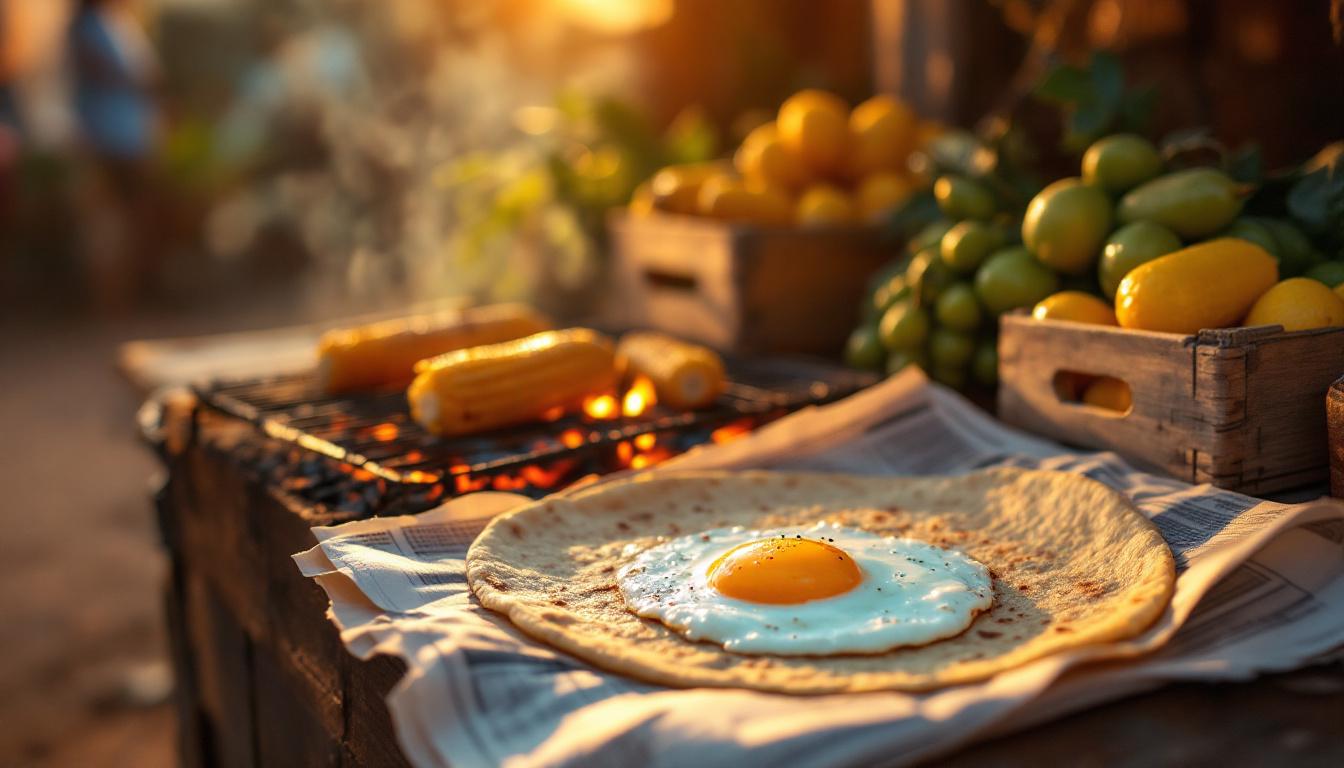
If you know, you know. A rolex is a chapati rolled around a fried egg omelette, sometimes with cabbage and tomato, cooked on a flat griddle over charcoal. It costs almost nothing. It is one of the most complete eating experiences I know. The skill is in the chapati. It has to be thin enough to roll without cracking but substantial enough to hold the egg. The griddle temperature matters. Too hot and the chapati chars before it cooks through. Too cool and it goes leathery.
I've tried to recreate it in a professional kitchen with better equipment and better ingredients. It's never quite right. Some food belongs to its context.
I grew up eating food cooked over charcoal and then spent years in kitchens with induction and gas. When I went back and ate rolex from a jiko, I understood what I'd been missing. Charcoal isn't just heat. It's variable, directional, and it communicates with the cook. You have to read it. Move the pan. Lift it. Tilt it. The food tells you when it's right through smell and sound in a way that a thermostat never can.
It made me a better cook on induction, oddly — because I started paying more attention to what the food was telling me rather than what the dial said.
Owino Market in downtown Kampala is overwhelming. It's also the most educational place I've spent time as a cook. You see what's in season because that's all there is. You smell ingredients before you see them. You learn to read the quality of a tomato by the weight, not the colour. You buy small and use everything because you're not storing — you're cooking today.
That relationship with ingredients — seasonal, immediate, nothing wasted — is the philosophy that every fine dining kitchen tries to market. In Owino it's just practical economics. The philosophy comes free.
The most expensive thing in fine dining is the pretence of simplicity. The most honest version of simplicity is just what you could afford.
I cook between both worlds now. I haven't figured out the balance yet. I'm not sure I'm supposed to.