The five mother sauces — history you'll still be asked about
Every interview I've sat in ten years, someone eventually asks it. Name the five mother sauces. I've been asked in Kampala. I've been asked at hotel interviews in Riyadh. I'll probably be asked again.
Here's the honest part: those sauces are history to me. Nobody on a modern line is holding espagnole. But the question keeps coming, so you learn the answer — and somewhere along the way you realise the answer is actually useful, just not the way culinary school framed it.
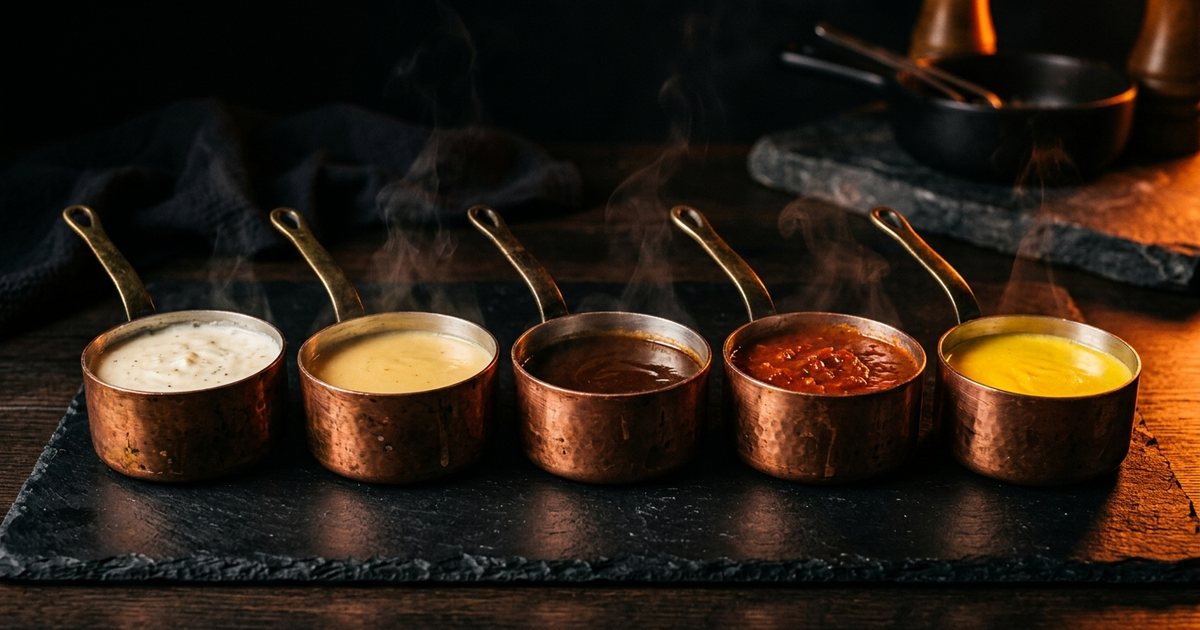
The five, and what they became:
Béchamel. Milk thickened with white roux. Add cheese and it's mornay — which is every cheese sauce you've ever put on anything. Made it plenty.
Velouté. Stock on white roux. The one I honestly haven't touched. Order a velouté today and what arrives is a soup, because that's where it survived — every blended, silky soup base is velouté wearing a new name.
Espagnole. Brown stock, brown roux, tomato, hours of your life. Reduce it by half with more stock and it's demi-glace. I've made the brown sauces — but the real descendant is the pan sauce: fond, deglaze, reduce, mount. Same logic, twenty minutes instead of two days.
Tomato. The one that never died. It didn't need to evolve — it just moved into every cuisine on earth and stopped being French.
Hollandaise. Egg yolks holding warm butter. Béarnaise is the derivative everyone knows. My worst round with it: four attempts in, whisking like my station depended on it, nothing coming together — and the thing I'd forgotten was the salt. Sometimes the sauce isn't broken. Your mise is.
So do they still matter? The names are a history exam. But strip the French off and you're left with four methods — roux, reduction, emulsion, and knowing when tomato needs nothing from you. Those run under half of what any kitchen sends out tonight.
Learn the names for the interview. Keep the methods for the rest of your career.