Salt: when to season, and what it actually does
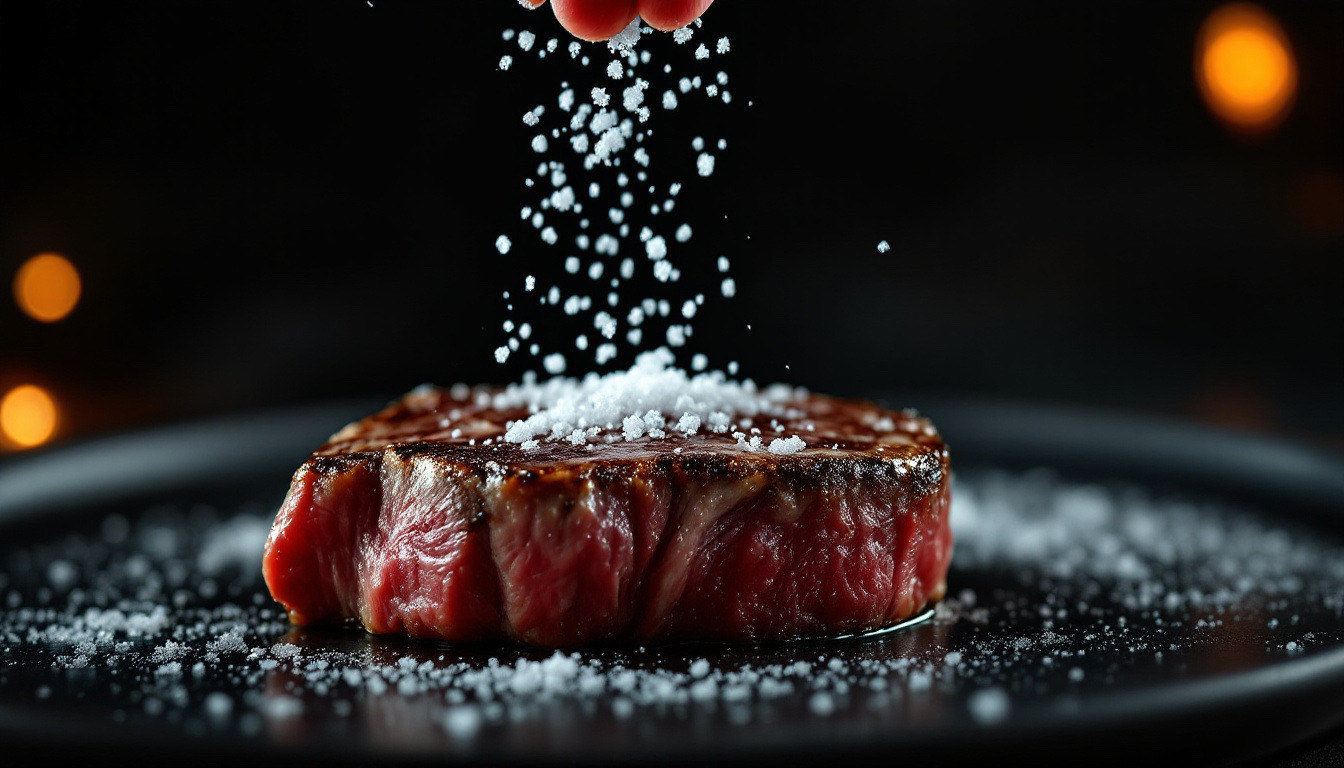
Everyone knows to salt food. Fewer are taught that when you salt changes what the salt does.
It does more than make things taste salty. Salt suppresses bitterness and raises the perception of sweetness and aroma, so food seasoned properly tastes more like itself. In meat it also dissolves some of the muscle proteins, which lets the meat hold on to more of its own water while it cooks. Chicken salted in advance comes out juicier than chicken salted in the pan, with nothing else changed.
Timing on proteins matters more than people realise. Salt on the surface pulls moisture out first; given time, that moisture dissolves the salt and gets drawn back in carrying it. The problem is the middle of that process — salt a steak fifteen minutes before it hits the pan and you have wet meat that will not brown. So salt immediately before cooking, or at least forty minutes before, and for a thick cut several hours. In between is the one place you do not want to be. Salted and left uncovered in the fridge overnight beats anything you can do in the last five minutes.
Vegetables run the other way. Salt the water heavily for anything boiled or blanched — the only chance to season the inside. Raw is different again: salt draws water out, which you want for aubergine or cabbage and very much do not want for a tomato salad dressed early.
Season in layers as you go — the water, the onions as they sweat, the braise at the start. All the salt at the end gives a dish that tastes salty on top and flat underneath. And reducing a liquid concentrates the salt already in it, so anything you intend to reduce gets seasoned light early and corrected at the end.
One thing catches people out. A spoon of fine table salt holds far more than a spoon of flakes, because of how the crystals pack. Swapping by volume is how a dish becomes inedible. Work by weight, or learn one salt and stay with it.