Blanching and refreshing: what the ice is actually for
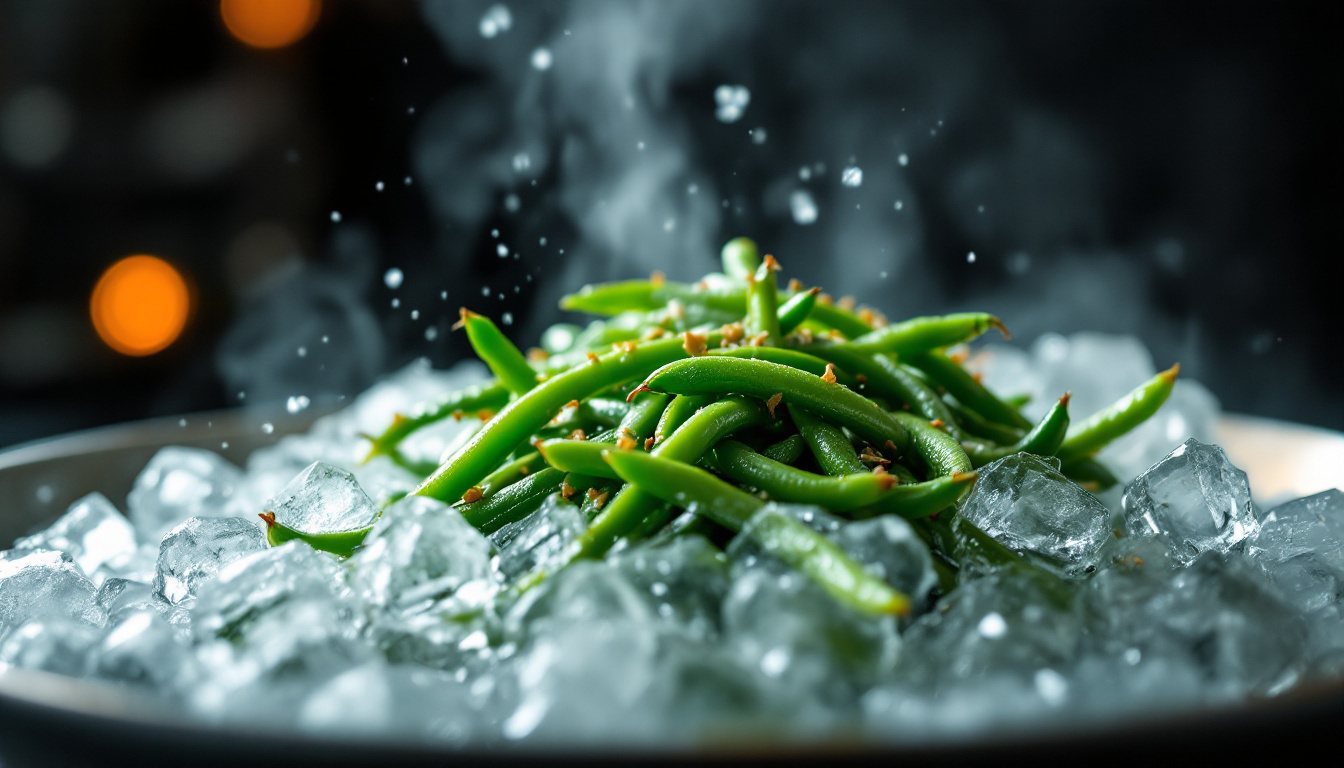
Blanching looks like the most basic thing in a kitchen and is one of the easiest to do badly. Grey-green beans and soft broccoli are almost always one of four mistakes.
Salt the water until it tastes properly seasoned. It is the only chance you get to season the inside of a vegetable.
Then keep it at a hard rolling boil, not a simmer. Green vegetables hold small pockets of gas in their tissue that scatter light and dull the colour, and brief fierce heat drives that gas out so the chlorophyll underneath reads as much brighter green. It is why a correctly blanched bean looks greener than the raw one.
Small batches is the rule that gets skipped when service is close, and it is the one that costs you. Drop a kilo of beans into a pot and the water stops boiling, so the vegetables sit in hot-but-not-boiling water for several minutes while it recovers. That is long enough for the second reaction to take over: as green vegetables cook they release acids, and those acids strip the magnesium out of chlorophyll and turn it into pheophytin, which is olive-brown. Brief cooking outruns that. Extended cooking does not. Plenty of water, small batches, and the lid off so the acids can escape rather than condensing back into the pot.
A vegetable pulled from boiling water is still cooking, and left on a tray it will carry on into overcooked while that acid reaction keeps running. A proper ice bath — actual ice, not a cold tap — stops it within seconds. Leave them in only until cold, because past that they start taking on water and losing flavour into it.
Then dry them properly. Wet vegetables will not take a sauce, will not roast and will not brown. Blanched and refreshed, they hold in the fridge for a day or two, which is the whole reason the technique exists: the cooking is done in advance and the pick-up is thirty seconds in butter or oil.